
Situation
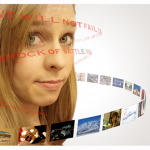
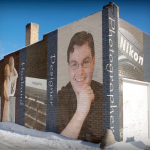
In order to demonstrate photography and design skills, your supervisor asks you to produce a self-portrait collage, in two sizes, to introduce yourself to a group of colleagues. This collage will include at least two images and some text.
Objectives
- Review basic principles of design and typography.
- Employ digital photography principles for well-composed images.
- Apply advanced Photoshop skills to create a collage with a flexible layout that will work as a 4×6 and 8×10.
- Size, upload and print a 4×6 and an 8×10 high quality photo collage print at an online one-hour lab.
Instructional Materials
Instructions
1) Take the photos: You must personally take images for this project. Images taken in previous semesters can be used. A self-taken portrait must be taken this semester. A tripod and self-timer, remote, or other creative methods may be used. You may check out one of the cameras from the circulation desk (library first floor). Please see the past projects under “Samples” above to get more ideas.
Self-portrait:
Here is a list of several ways that you can take a self-portrait (Remember this needs to be taken this semester):
- Self-Timer: Most cameras have a self-timer feature. Look at the owners manual to find out how to use this feature. This method will also require you to stabilize the camera. The use of a tripod would be ideal, but you could try just stabilizing the camera on a flat surface.
- Reflection: You can always try taking a picture of your reflection. This could be in a mirror, water, or other reflective surface. Remember that you will probably have your camera in the shot.
- Computer Camera: Most macs have a built-in camera that you could use to take a snapshot of yourself. The only downfall to this method would be that usually you don’t have good lighting where you would be using a computer. This method can be used if you can achieve good lighting.
- Selfie
Arm Extension: You can try reversing your camera and extending your arm. This often doesn’t look professional or flattering. I would try to avoid this method.
Additional Images:
You need at least one additional image for this project. Your additional image(s) also need to be self-taken, but they can be from previous semesters. Capture/Select images that reflect you, and what you like to do. It will be easier to combine these images with your self-portrait if you take them at the same time. This will help keep consistent lighting conditions across all of your images.
2) Create a collage in Photoshop:
Use two or more digital images to create an 8×10 collage @150 pip in Photoshop. The dominant image must be a self-taken portrait, but the content for other image(s) is open. The images may be blended with masks, or cropped and arranged in an appealing composition. (See blending and masking tutorials, above.) Some text must be included, but names are optional.
3) Size and save layout for 8×10 and 4×6:
Plan the layout so it will also work when cropped to a 4×6. For example, with a horizontal orientation, the top and bottom will need to come in for a 4×6. With a vertical layout the sides will be narrower. Also, be sure to maintain any borders you may have with the same proportions. DO NOT just crop down your existing layout.
4) Upload and print at a one-hour photo lab:
Save and upload properly sized RGB jpegs to an online one-hour photo lab: 8×10 and 4×6 inches @ 150 ppi, Maximum Compression; Optimized Quality. Bring the completed evaluation form with the 4×6 and 8×10 prints to class. Add name and section to the back of prints. Make sure to create/submit your self-portrait blog post, in addition to bringing your 4×6 and 8×10 prints to class.
Project Examples


Rubric (Part 1)
75% of your grade comes from this checklist (Failure to meet any of these requirements disqualifies you from earning anything higher than a 85% on the whole project.)
Prox/Align |
Photography |
|
|
|
|
Rep/Cont/Flow |
Design/Quality |
|
|
|
|
Typography |
Size/Margins |
|
|
|
|
Professionalism |
Submission |
|
|
|
Rubric (Part 2)
The remainder of your grade is based on the following. This portion is fairly subjective. It would be a good idea to schedule times to meet with the instructor to gauge progress.
Mastery of subject matter |
|
| (A) | Work demonstrates outstanding understanding, application, and integration of the subject material and extensive evidence of original thinking, skillful use of concepts, and ability to analyze and solve complex problems. |
| (B) | Work demonstrates considerable/significant understanding, application, and incorporation of the material. |
Promise of continuing success |
|
| (A) | Work would be highly sought after in next level courses, graduate school, or employment. |
| (B) | Work would be successful in next level courses, graduate school, or employment. |
This rubric is based on the University grading scale: |
|
Recent Comments